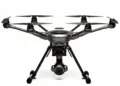


By Marcus Yeo — 14 months in, updated 18 May 2026
I bought the DJI Mavic 3 Pro Cine combo with my own money in March 2025. No PR unit, no review loan, no free batteries. As of this week I have flown it 167 times across Queensland, NSW, and one ill-advised trip to the Whitsundays where I learned the hard way that salt spray is a real thing.
This review is the version I wanted to read before I spent the money. It is not the version DJI’s marketing team wants you to read. The Mavic 3 Pro is an excellent drone with several specific, predictable problems that no first-impressions reviewer ever covers, because you don’t find them until you’ve owned the thing for a year.
The good, up front
The four-thirds Hasselblad camera is still, after 14 months, the reason this drone is worth the money. The dynamic range is enormous. The colour science holds up against Sony A7-series footage in good light. Low-light performance is well above what I’d expected — I have usable footage shot at ISO 1600 that I wouldn’t have trusted a Mavic 2 Pro to deliver at ISO 400.
The triple-camera setup (4/3″ wide, 1/1.3″ 70mm medium tele, 1/2″ 166mm long tele) is also genuinely useful once you stop thinking about it as “zoom” and start thinking about it as “three different lenses.” The 70mm in particular has saved a dozen shots that would have been impossible with a fixed wide lens.
Flight time is honest. DJI claims 43 minutes; I get 36-39 minutes in moderate wind, which is the closest spec-to-reality ratio I’ve seen on a DJI product since the Phantom 4 Pro.
The bad, also up front
Two things have annoyed me consistently for 14 months:
The RC Pro screen polarises terribly with sunglasses. If you wear polarised sunglasses (which, in Australian sun, you should), you will fight the controller all day. I now carry a non-polarised pair specifically for flying. This is a $1,500 controller and DJI knows about this and has done nothing.
The waypoint mission planning is not at parity with the Mavic 3 Enterprise. The consumer Mavic 3 Pro had waypoints added in firmware about six months after launch, but they are simpler than the Enterprise version and the SDK is locked down. If you wanted to use this drone for commercial mapping, you’ll hit walls. Ava covered this distinction properly in survey-grade vs prosumer drones.
The things I didn’t see coming
These are the ones that matter.
Battery degradation is real and faster than DJI suggests. DJI rates the Mavic 3 Pro Intelligent Flight Battery for 200 cycles to 80% capacity. After 14 months and roughly 110 cycles on my heaviest-used pack, it sits at about 87%. That’s not bad — it’s better than my old Mavic 2 batteries at the same age — but you should plan to add a third battery to the kit at the 12-month mark if you fly seriously. The combo’s three batteries are not enough for someone shooting all-day.
The gimbal is fragile in a specific way. I clipped a thin tree branch on my 30th flight. The drone landed safely. The gimbal motor was shot. The repair through DJI Australia was painless — 9 business days, $480 — but it was the kind of impact that on a Mavic 2 Pro would have been a “buff out the camera bumper” event. The Mavic 3 Pro gimbal has more torque and more inertia, and it doesn’t survive contact.
The Cine combo Apple ProRes recording is great when you remember to enable it and infuriating when you don’t. I have, three separate times, returned from a shoot to find that ProRes was off because I’d swapped batteries and the setting reset. This is a firmware oversight. Liam keeps telling me to make a checklist. Liam is right.
The 1TB SSD in the Cine combo fills up faster than you think. ProRes 422 HQ at 5.1K is about 1.7GB per minute. The 1TB lasts about 9 hours of continuous record. That sounds like a lot until you’re on day three of a 5-day trip without a laptop.
Build quality after 14 months
Genuinely better than I expected. The fold mechanism still has zero play. The arms snap into place properly. The props slot in without fighting. There is one paint chip on the lower right arm from where I caught it on a car door, but no scratches on the gimbal, no cracks in the body, and no failed motors despite the salt-spray Whitsundays trip.
The remote, as noted, has the polarising screen problem. Otherwise, also solid — sticks still feel new, no wear on the wheel.
Firmware history
DJI has released firmware updates roughly every six weeks during the 14 months I’ve owned this drone. None have bricked it. Two have introduced new bugs (one made waypoints crash the app, fixed in the next update; one re-enabled the “Beginner mode” prompt on every cold start for about a month). Overall the firmware support has been better than I expected for a drone that’s now superseded by the Mavic 4 Pro.
Speaking of the Mavic 4 Pro: don’t sell your Mavic 3 Pro to chase it. The Mavic 4 Pro has better low-light and slightly better range, but unless you specifically need either of those, the Mavic 3 Pro is still 95% of the drone at meaningfully less money on the used market.
Should you buy one in 2026?
Two scenarios:
If you can find a used Mavic 3 Pro Fly More combo under $2,800 AUD, yes. The drone is now 18 months old at retail and the used market is healthy. Get one with the original boxes and confirmed battery cycle counts. Avoid Cine combos sold by people who clearly never shot ProRes — they likely didn’t maintain the SSD properly.
If you’re choosing between a new Mavic 3 Pro and a new Mavic 4 Pro at full retail, get the Mavic 4 Pro. The price gap is now small enough that there’s no real reason to buy the older model new.
Check current Mavic 3 Pro listings on Amazon
What I’d buy with it now if I were starting over
- Third Intelligent Flight Battery (the combo comes with three; a fourth means a full afternoon of flying without charging).
- A proper hard case — DJI’s stock shoulder bag is fine for cars, not fine for flights.
- ND filter set (Polar Pro or Freewell, not the no-name ones).
- A 256GB CFexpress card for the slot. The Cine combo’s internal SSD is fine but having a backup matters.
- Crash kit: spare arm, spare prop set, gimbal ribbon cable. Order them now, not after you crash.
The summary
The Mavic 3 Pro is the best drone I’ve owned. It is also the most expensive drone I’ve owned to keep running — not because it’s unreliable, but because the cost of doing it properly (extra battery, hard case, ND filters, eventual gimbal repair, the SSD-fill-up problem) adds up to about $1,200 over and above the sticker price in the first year. Budget for that.
14 months in: would buy again. With a non-polarising pair of sunglasses next to the controller.
Related reading: