

By Hannah Briggs — updated 18 May 2026
Picking a first drone under $500 in Australia is harder than it should be. The under-$500 segment is where Amazon listings get weird — you’ll see a “drone” with a flashing thumbnail and 47 unverifiable specs for $179, sitting next to a perfectly fine DJI Mini 2 SE at $549, with the $400 mid-range almost entirely dominated by brands you’ve never heard of and won’t see again in 18 months.
This is the version of that buying experience I wish I’d had three years ago. We have flown every drone on this list (or, in two cases, watched Marcus fly it and review it on our shared spreadsheet, which is roughly the same thing).
At a glance: how our picks compare
| Drone | Weight | Camera | Flight time | CASA register? | Approx. AUD | Best for |
|---|---|---|---|---|---|---|
| DJI Mini 3 | <249g | 4K/30, 1/1.3″ | 38 min | No | ~$480 (refurb) | Best overall |
| DJI Mini 2 SE | <249g | 2.7K/30 | 31 min | No | ~$429–$499 | Best brand-new pick |
| Holy Stone HS720E | 495g | 4K EIS | 26 min | Yes ($40/yr) | ~$350–$400 | Best non-DJI |
| Potensic Atom | <249g | 4K EIS | 32 min | No | ~$279–$329 | Best learner / kids |
| BetaFPV Cetus X kit | ~80g (drone) | Analog FPV cam | ~5 min | No (under 250g) | ~$419 (kit) | FPV starter |
Heads up: the buy buttons below all go to Amazon Australia with our affiliate tag drones02-22. Costs you nothing extra. We only recommend gear our team would happily fly themselves.
1. DJI Mini 3 (refurbished or closeout) — our top pick
DJI Mini 3
Refurb available
Best value
Why it wins: The Mini 3 was discontinued at retail when the Mini 4 Pro launched, which means refurbished and clearance stock floats around well under the original $749. As of writing we are seeing tagged listings around $480 for a Fly More Combo on Amazon Australia.
- Sub-250g — no CASA registration needed for recreational use
- 4K/30 video, 1/1.3″ sensor — genuine drone footage, not “drone footage”
- RC-N1 controller works with your phone; or pay extra for the RC with built-in screen
- 38-minute flight time (real-world ~32 min) is the longest in this price bracket
What’s not great: no obstacle avoidance. You will fly into a tree on your first windy day. Plan for that.
2. DJI Mini 2 SE — if you want brand-new with warranty
DJI Mini 2 SE
In current production
DJI warranty
Why we recommend it: You’re getting DJI build quality, DJI firmware, DJI support, and DJI’s reasonably forgiving newbie flight modes. The camera is “good enough” for social media. Sub-250g so no registration. You can be unboxing and flying within 90 minutes.
What’s not great: 2.7K is fine until you watch a Mini 3 owner’s clip side-by-side and then it’s painfully not fine. If your budget can stretch, the Mini 3 is worth waiting for stock on.
3. Holy Stone HS720E — the best non-DJI option
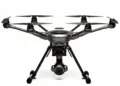
Holy Stone HS720E
No DJI account required
Standalone controller
Why it works: Holy Stone has been around long enough that customer service actually exists, parts are available, and the app is updated. GPS return-to-home, a 4K EIS-stabilised camera (not gimbal-stabilised, important distinction), 26 minutes claimed flight (about 22 real), and a controller that does not require a phone.
What’s not great: EIS only, not a real gimbal — you’ll see judder when you yaw quickly. The transmission distance is honest at about 800m before you start getting nervous; spec sheet says 1km. Over 250g so you’ll need to register ($40/year per drone).
4. Potensic Atom — the best learner/kids drone
Potensic Atom
Cheapest sub-250g
Honest specs
This is the one we hand to kids and to absolute first-timers. Sub-250g, GPS, a 4K camera, and around $279–$329 depending on bundle. No obstacle avoidance and the camera is markedly worse than the Mini 3, but the flight characteristics are forgiving and it survives small crashes that would write off most cheaper drones.
Potensic is also a refreshingly honest brand. They don’t claim 50km transmission and 4-hour flight times. They claim what it actually does.
5. BetaFPV Cetus X kit — the only sub-$500 FPV starter we trust
BetaFPV Cetus X Kit
FPV learning curve
Full kit (radio + goggles)
FPV is a different sport from “DJI press the button” droning. If you genuinely want to learn FPV, do not buy a cinematic DJI drone. Buy a real FPV trainer like the Cetus X kit. Tiny brushless quad with a proper FPV transmitter and goggles, around $419 for the bundle, and the only sub-$500 FPV starter that doesn’t feel like a toy.
Warning: FPV is harder. You will crash. You will fix it with electrical tape. You will buy more props. This is normal. If that doesn’t sound fun, get a Mini 3 and forget FPV exists.
What we deliberately left off the list
We get asked about these regularly:
- The $179 “4K drone with camera” generic listings on Amazon. Hard pass. Camera is interpolated 2MP. Flight controller has no GPS. You will lose it on day two.
- Ryze Tello. Lovely for kids learning to fly indoors. Below the bar for outdoor use — no wind resistance, no GPS.
- The Autel Lite+. Genuinely good drone but currently sits over $700, so not in this guide. If you can stretch, it deserves consideration — the Autel Lite+ punches well above the Mini 3 in low light.
- Anything labelled “Pro” or “Pro Max” under $200. The word “Pro” in a $179 drone is decorative.
Don’t forget the registration question
Three of the picks above (Mini 3, Mini 2 SE, Potensic Atom) are sub-250g and need no CASA registration for recreational use. The Holy Stone HS720E pushes well over 250g, so you’ll need to register it at $40/year. The BetaFPV Cetus X is technically under 250g but the FPV regulatory situation is its own conversation. Liam’s written the full breakdown of CASA’s current drone rules if you want the detail.
Useful accessories worth budgeting
Whichever drone you pick, plan for these:
- Extra batteries. One battery is one flight. Get at least two more — see our drone batteries category.
- ND filters if you’re doing video. Without them, your footage looks like CCTV. Our ND filter picks.
- A proper case. The box the drone ships in is not a case — see cases & backpacks.
- A microSD card that is actually fast. Mini drones write 4K video at 100Mbps. A bargain-bin Class 10 will drop frames. Our memory card picks.
- A LiPo safe bag. Especially if the drone lives in a hot car. LiPo safety storage.
Bottom line
If you’re spending under $500, buy a DJI Mini 3 if you can find one in stock, a DJI Mini 2 SE if you can’t, or a Holy Stone HS720E if you really don’t want a DJI. The other 90% of the listings in this price bracket are toys with marketing departments.
Related reading: