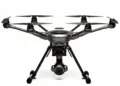


By Marcus Yeo — updated 18 May 2026
If you’re shopping for a DJI in Australia in 2026, the lineup has more overlap than ever — the Mini 4 Pro and the Air 3 do similar things at different weight thresholds; the Mavic 3 Pro and Mavic 4 Pro both still ship; the Avata 2 has stolen most of the FPV-curious crowd. This guide is the version I wish was sitting on Amazon AU’s category page: every current DJI consumer drone, ranked for who should actually buy it.
At a glance: every current DJI consumer drone
| Drone | Weight | Camera | Flight time | Approx. AUD | Best for |
|---|---|---|---|---|---|
| Mavic 4 Pro | 958g | Triple, 4/3″ main | 51 min | $3,899+ | Flagship cinematography |
| Mavic 3 Pro | 958g | Triple, 4/3″ main | 43 min | $2,799+ | Best value pro tier |
| Air 3S | 724g | Dual wide + 3x tele | 45 min | $1,599+ | All-rounder prosumer |
| Mini 4 Pro | <249g | 4K/100, 1/1.3″ | 34 min | $1,099+ | Best sub-250g |
| Mini 3 | <249g | 4K/30, 1/1.3″ | 38 min | $480 (refurb) | Best budget sub-250g |
| Mini 2 SE | <249g | 2.7K/30 | 31 min | $429–$499 | Cheapest new DJI |
| Avata 2 | 377g | 1/1.3″ wide | 23 min | $1,299+ | FPV-style cinema |
| Neo | 135g | 4K stabilised | 18 min | $329+ | Palm-launch selfies |
Heads up: all “Check price on Amazon” buttons below use our affiliate tag drones02-22. Costs you nothing; pays for the gear we crash.
1. DJI Mavic 4 Pro — the flagship
DJI Mavic 4 Pro
51-min flight
2025 release
DJI’s late-2025 flagship. Bigger main sensor than the Mavic 3 Pro, longer transmission and meaningfully improved low-light. If you’re starting fresh in 2026 at the top of the consumer line, this is the right buy — the price gap to the Mavic 3 Pro has narrowed enough that going one generation older just isn’t worth it.
Skip if: you already own a Mavic 3 Pro. The upgrade is real but not enough to justify swapping a 14-month-old kit. See Marcus’s Mavic 3 Pro long-term review.
2. DJI Mavic 3 Pro — the best value at the top end
DJI Mavic 3 Pro
70mm + 166mm tele
43-min flight
The Mavic 3 Pro is still 95% of the Mavic 4 Pro at meaningfully less money. The three-camera setup (4/3″ wide + 70mm medium tele + 166mm long tele) is genuinely useful once you stop thinking about it as “zoom” and start thinking about it as “three different lenses”. Marcus has flown ours 167 times in 14 months; full breakdown in the long-term review.
Skip if: you can stretch to the Mavic 4 Pro at full retail — in 2026 the price gap is small enough that the older model isn’t the obvious buy new.
3. DJI Air 3S — the all-rounder most people should buy
DJI Air 3S
LiDAR obstacle sensing
45-min flight
If someone walked in tomorrow and asked which DJI to buy, this is what we’d point them at first. The Air 3S has improved low-light, LiDAR-assisted obstacle avoidance, a forward-facing LED for visibility, and a 1.5x telephoto secondary lens that’s a real composition tool. Sits in the sweet spot between Mini-class limitations and Mavic-class price.
Skip if: you want sub-250g (look at the Mini 4 Pro) or you specifically need a 4/3″ sensor for low light and stills (Mavic 3 Pro / Mavic 4 Pro).
4. DJI Mini 4 Pro — the best sub-250g drone you can buy
DJI Mini 4 Pro
Omnidirectional obstacle sensors
4K/100fps HDR
The first sub-250g DJI with proper omnidirectional obstacle sensing. 4K/100fps HDR, OcuSync 4 to ~20km, 34-minute flight (real-world ~28). The drone you buy if you specifically want to avoid CASA registration and still get serious capability.
Skip if: you’ll fly with a phone-cradle controller from the start and don’t care about waypoints — in that case the Mini 3 or Mini 2 SE save you significant cash.
5. DJI Mini 3 — the bargain sub-250g pick
DJI Mini 3
38-min flight
Refurb ~$480
Covered in detail in Hannah’s under-$500 guide. Worth repeating here: if you want a real DJI under $500 and don’t need obstacle sensors, the Mini 3 refurb is the best buy on the entire current Amazon AU page.
6. DJI Mini 2 SE — the absolute cheapest new DJI
DJI Mini 2 SE
In current production
DJI warranty
The cheapest current DJI drone in production. Same Mini-class form factor, slightly stripped camera (2.7K instead of 4K), no obstacle sensors. Buy if “must be brand-new with warranty” is non-negotiable.
7. DJI Avata 2 — FPV-style cinema without the FPV learning curve
DJI Avata 2
Goggles 3 + RC Motion 3
Indoor-friendly
The easiest way into FPV-style footage. Built-in prop guards, single-stick motion controller, goggles included in the Fly Smart Combo. Not a real FPV drone — you can’t do dives, freestyle or race — but it gets you 80% of the look with 10% of the learning curve. The drone we’d buy first if “smooth flowing cinematic indoor footage” is the goal.
8. DJI Neo — the selfie-drone outlier
DJI Neo
No controller needed
Cheapest entry to DJI
Niche but interesting. Palm-launch, no controller needed for basic flight modes, programmable orbit and dolly-zoom shots. Buy if you specifically want a travel-pocket selfie drone for hiking or beach use; skip if you want to actually fly a drone — this thing’s range is comically limited.
How to pick: a 30-second decision tree
- Sub-250g, no registration, top quality: Mini 4 Pro
- Sub-250g, no registration, lowest cost: Mini 3 (refurb) or Mini 2 SE (new)
- All-rounder under $2K, prosumer: Air 3S
- Cinema work, three lenses, best value: Mavic 3 Pro
- Flagship, no compromise, current generation: Mavic 4 Pro
- FPV-style footage without learning FPV: Avata 2
- Travel selfies, no controller: Neo
What about the enterprise line?
Not covered here. If you’re considering the Mavic 3 Enterprise RTK, Matrice 30T, Matrice 350 RTK or the Agras T40 / T50, read Ava’s survey-grade vs prosumer guide first.
What we deliberately left off
- DJI Mini SE. End of life. Skip in favour of the Mini 2 SE.
- DJI FPV (original). Niche and aging. Real FPV pilots should look at proper FPV kit; FPV-curious viewers should buy an Avata 2.
- DJI Mini 4K. Marketing rebadge of the Mini 2. Buy a Mini 2 SE instead.
- DJI Inspire 3. Cinema-grade. If you’re spending Inspire money, you don’t need this guide.
Useful accessories regardless of which DJI you buy
- Two more Intelligent Flight Batteries — one is one flight.
- ND filters for video. Without them, your footage looks like CCTV.
- A fast microSD card. Bargain-bin cards drop 4K frames.
- A hard case or backpack. The cardboard box is not a case.
- A LiPo safe bag. Hannah explains why in the batteries guide.
Related reading: